
Building a home, renovating a property, or developing a commercial space represents one of the largest investments most people will make. While architectural design often receives the most attention, the construction company responsible for delivering the project has an even greater influence on its success.
A capable contractor does far more than manage labor on-site. They coordinate engineering disciplines, control costs, schedule resources, oversee quality, manage procurement, and solve problems before they affect the project. Choosing the wrong company can lead to delays, budget overruns, compromised workmanship, and disputes that continue long after construction is complete.
The Lebanese construction market presents additional challenges. Material prices can fluctuate, specialized products may require longer procurement periods, and projects often involve multiple consultants, suppliers, and subcontractors. These realities make careful contractor selection one of the most important risk-management decisions a homeowner or investor can make.
This guide explains how to evaluate a construction company, what services you should expect, the qualities that distinguish reputable contractors, and the questions every homeowner should ask before signing a construction agreement.
Key Takeaways
Why Choosing the Right Construction Company Matters

Selecting a construction company influences far more than who builds your project. It affects how accurately costs are estimated, how efficiently work is coordinated, how consistently quality is maintained, and how smoothly the project progresses from concept to completion.
Many construction problems don’t begin on-site. They begin much earlier through incomplete planning, unrealistic schedules, vague quotations, or poor coordination between design and execution. These issues often remain hidden until construction is underway, when resolving them becomes significantly more expensive.
For homeowners in Lebanon, this decision is particularly important. Construction projects frequently involve imported materials, multiple specialized trades, and evolving project requirements. A contractor with structured planning processes and strong project management is generally better equipped to navigate these challenges while maintaining quality and controlling costs.
Changing contractors midway through a project is rarely a practical solution. Beyond the direct financial impact, it often leads to schedule disruptions, repeated inspections, contractual disputes, and additional work to verify or correct completed construction.
For these reasons, selecting a construction company should be viewed not as choosing the lowest bidder, but as choosing the team most capable of delivering your project successfully.
What Services Should a Professional Construction Company Provide?
Professional construction companies manage far more than on-site execution. Their role is to coordinate every stage of the project, ensuring that planning, engineering, procurement, construction, and quality assurance work together to achieve the desired outcome.
A company offering comprehensive services can typically identify potential issues earlier, improve communication between stakeholders, and reduce costly delays during construction.
1. Design & Planning

This stage establishes the project’s objectives, functional requirements, preliminary budget, and construction strategy. Careful planning helps reduce uncertainty before work begins.
2. Engineering & Bill of Quantities (BOQ)
Engineering transforms design concepts into buildable solutions, while a Bill of Quantities (BOQ) provides transparency by defining project scope, material quantities, and estimated costs.
3. Project Management
Project managers coordinate schedules, procurement, subcontractors, inspections, budgets, and client communication to keep construction progressing efficiently.
4. Construction Execution
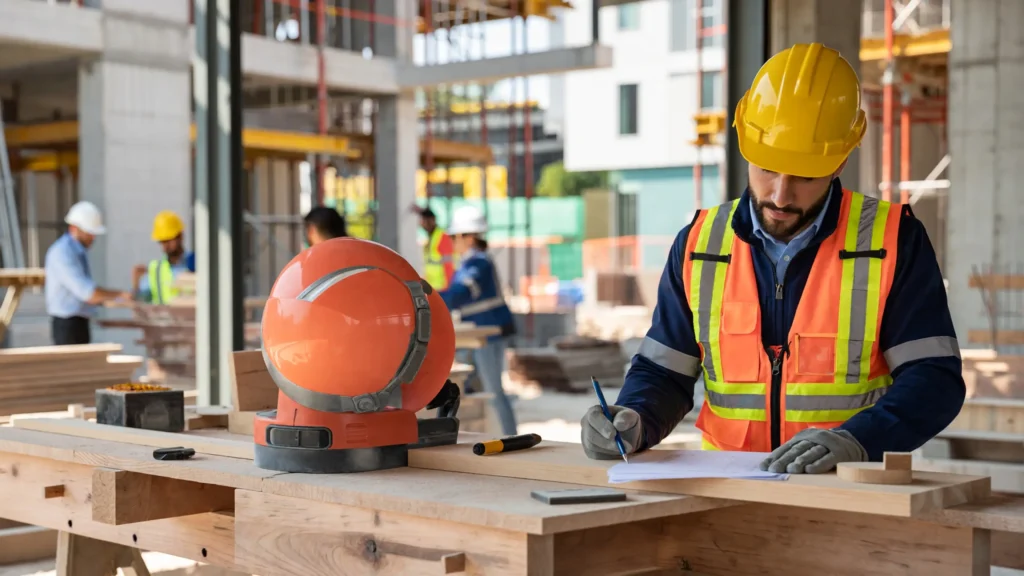
Execution includes structural work, building systems, architectural finishes, and coordination between multiple trades while maintaining compliance with approved drawings and specifications.
5. Quality Control & Final Handover
Professional contractors perform continuous inspections throughout construction and complete final testing, documentation, and handover procedures before the project is considered complete.
An experienced contractor also considers how engineering decisions affect the building after construction. Learn why building performance is becoming one of the most important measures of construction quality.
10 Qualities Every Reputable Construction Company Should Have
Every construction company can present photographs of completed projects. What distinguishes a truly professional contractor is how the project is planned, managed, documented, and delivered. Before making a decision, homeowners should evaluate the following qualities.
1. Transparent Bill of Quantities (BOQ) and Pricing
A detailed quotation should clearly define the scope of work, material specifications, quantities, exclusions, and payment milestones. Transparency at the beginning of a project reduces misunderstandings later.
2. Strong Engineering Capability
Construction quality depends on coordinated structural, architectural, mechanical, and electrical planning. Companies with strong engineering expertise are generally better prepared to identify technical challenges before construction begins.
3. Proven Project Management Systems
Successful projects require structured scheduling, procurement planning, progress tracking, and communication. Ask how the company monitors progress and manages unexpected changes.
4. Financial Stability
Construction projects often extend over several months. Financially stable companies are better positioned to maintain labor, purchase materials on time, and keep projects moving despite market fluctuations.
5. Reliable Procurement and Supply Chain Management
Material availability directly affects project timelines. Professional contractors plan purchases early, coordinate supplier deliveries, and verify material quality before installation.
6. A Strong Safety Culture
Safety reflects the professionalism of a construction company. Well-managed sites typically demonstrate better organization, supervision, and operational discipline throughout the project.
7. Clear and Consistent Communication
Regular progress updates, documented decisions, and transparent reporting help prevent misunderstandings and allow homeowners to make informed decisions throughout construction.
8. Comprehensive Quality Assurance

Quality should be verified throughout every stage of construction rather than inspected only at the end. Continuous inspections reduce rework and improve long-term building performance.
9. Relevant Project Experience
Experience is most valuable when it closely matches your project type. A contractor with expertise in luxury residential construction may not be the best choice for an industrial facility, and vice versa.
10. Warranty and Post-Handover Support
Professional contractors remain accountable after project completion by providing warranty support, documentation, and assistance during the transition from construction to occupancy.
Questions Every Homeowner Should Ask Before Hiring a Contractor
Before signing any construction agreement, homeowners should have a clear understanding of how the contractor plans, communicates, manages risk, and delivers quality. Asking the right questions early can reveal far more than a polished portfolio or competitive quotation.
The following questions can help guide your evaluation.
| Question | Why It Matters |
|---|---|
| Can you provide a detailed BOQ and explain each major cost item? | Helps identify hidden costs and ensures pricing transparency. |
| Who will supervise the project on a daily basis? | Clarifies accountability and site management. |
| How do you handle changes or additional work during construction? | Reduces the risk of unexpected costs and disputes. |
| Can you share examples of projects similar to mine? | Demonstrates relevant experience rather than general capability. |
| How do you monitor quality throughout construction? | Shows whether inspections are proactive or only performed at completion. |
| What is your expected timeline, and how do you manage delays? | Reveals the contractor’s planning process and communication practices. |
| What warranties or post-handover support do you provide? | Confirms long-term accountability after project completion. |
A professional construction company should answer these questions confidently, provide supporting documentation where appropriate, and explain its processes clearly. Transparency during the selection stage is often a strong indicator of transparency throughout the project.
Red Flags That Should Never Be Ignored
Not every issue is immediately visible during the tendering process. However, certain warning signs should encourage homeowners to ask additional questions before committing to a contractor.
Common red flags include:
- Quotations that are significantly lower than competing proposals without a clear explanation.
- Incomplete or vague BOQs that make it difficult to compare offers.
- Unrealistic completion timelines that don’t reflect the project’s complexity.
- Reluctance to provide references or examples of similar projects.
- Requests for substantial upfront payments without a detailed contract or payment schedule.
- Poor communication during the quotation stage, including delayed responses or inconsistent information.
None of these signs automatically indicate an unreliable contractor, but they should prompt further evaluation. In construction, early warning signs often become larger problems once work begins.
Before comparing quotations, it’s important to understand the realistic costs involved in residential construction. Read our guide on how much it costs to build a luxury villa in Lebanon to establish accurate budgeting expectations.
Why the Lowest Price Can Become the Most Expensive Decision

Choosing a contractor based solely on the lowest quotation can lead to higher overall costs if important elements have been omitted from the proposal or if quality is compromised during execution.
Lower prices may result from incomplete scopes of work, underestimated quantities, lower-grade materials, or insufficient planning. While the initial quotation appears attractive, homeowners may later face additional variation orders, project delays, or corrective work that exceeds the original savings.
Rather than asking, “Which quotation is the cheapest?”, a more useful question is:
“Which quotation provides the clearest scope, the most realistic budget, and the greatest confidence that the project will be completed successfully?”
Construction should be evaluated on overall value, not simply initial cost.
Turnkey vs Traditional Contracting
Homeowners often choose between a turnkey approach and a traditional contracting model. Each offers different levels of responsibility and client involvement.
| Turnkey Construction | Traditional Contracting |
|---|---|
| One company manages the project from design to handover. | Design and construction are managed through separate parties. |
| Single point of responsibility. | Multiple consultants and contractors coordinate the project. |
| Streamlined communication. | Greater client involvement throughout the project. |
| Better integration between design and execution. | Greater flexibility when selecting consultants or contractors individually. |
| Often preferred for clients seeking a simplified project experience. | Often preferred when the client wants greater control over each project phase. |
The right approach depends on the project’s complexity, the homeowner’s level of involvement, and the preferred method of project delivery.
Contractor Evaluation Checklist
Before making your final decision, confirm that your preferred construction company can answer yes to most of the following:
| ✔ | Evaluation Point |
|---|---|
| ☐ | Detailed BOQ and transparent pricing provided |
| ☐ | Relevant experience with similar projects |
| ☐ | Qualified engineering and project management team |
| ☐ | Realistic construction schedule presented |
| ☐ | Clear communication process established |
| ☐ | Quality assurance procedures explained |
| ☐ | Warranty and post-handover support confirmed |
Frequently Asked Questions
How do I know if a construction company is reputable?
Look beyond completed projects. Review the company’s experience with similar developments, request a detailed BOQ, ask about project management processes, evaluate communication during the quotation stage, and verify that warranties and documentation are provided after completion.
What is a Bill of Quantities (BOQ)?
A BOQ is a detailed document listing the quantities, materials, and scope of work required for a construction project. It improves pricing transparency and allows homeowners to compare quotations more accurately.
Should I always choose the lowest quotation?
Not necessarily. The lowest quotation may exclude important work, use different material specifications, or underestimate project requirements. Comparing scope and quality is generally more valuable than comparing price alone.
How long does it take to build a house in Lebanon?
Construction timelines vary depending on project size, design complexity, permitting requirements, weather conditions, material availability, and site conditions. A professional contractor should provide a realistic schedule with clearly defined milestones rather than broad completion estimates.
What’s the difference between a contractor and a construction company?
A contractor may focus primarily on executing construction work, while a professional construction company often provides a broader range of services, including planning, engineering coordination, procurement, project management, quality assurance, and final handover.
When should I involve a construction company in my project?
Ideally, during the planning and design stages. Early involvement allows potential construction challenges, budgeting considerations, and scheduling requirements to be identified before work begins, reducing the likelihood of costly changes later.
Sources & Methodology
This guide has been developed using internationally recognized construction management principles, engineering best practices, and publicly available information on Lebanon’s regulatory framework. Rather than promoting a particular contracting approach, it is intended to provide homeowners with an objective framework for evaluating construction companies based on planning, engineering, project management, quality assurance, and long-term project performance.
While every construction project is unique, the evaluation criteria presented throughout this guide align with established industry practices and professional standards commonly applied to residential and commercial developments.
Primary References
| Organization / Reference | Relevance to This Guide |
|---|---|
| Project Management Institute (PMI) – PMBOK® Guide | Project planning, scheduling, risk management, stakeholder communication, and project delivery best practices. |
| Royal Institution of Chartered Surveyors (RICS) | Quantity surveying, cost management, procurement, and construction professional standards. |
| FIDIC (International Federation of Consulting Engineers) | Internationally recognized engineering and construction contract principles, project responsibilities, and risk allocation. |
| ISO 9001 – Quality Management Systems | Principles of quality management, continuous improvement, and documented quality assurance processes. |
| Order of Engineers and Architects (Lebanon) | Professional engineering practice, supervision requirements, and engineering documentation referenced throughout Lebanon’s construction permitting process. |
| General Directorate of Urban Planning (Lebanon) | Official Lebanese regulations relating to urban planning, building permits, construction procedures, and applicable legislation |
Editorial Note
This article is intended for educational purposes and should not be interpreted as legal, engineering, or contractual advice. Building regulations, permit requirements, technical specifications, and contractual obligations may vary depending on the project’s location, scope, municipality, and applicable Lebanese laws. Homeowners should always consult qualified architects, engineers, and legal professionals before making construction or contractual decisions.
Planning Your Next Construction Project
Choosing a construction company is one of the most important decisions you’ll make before breaking ground. Taking the time to evaluate experience, technical capability, project management, transparency, and quality processes can significantly improve the likelihood of delivering a successful project.
If you’re planning a residential, commercial, or mixed-use development and would like to discuss your project requirements with an experienced engineering and construction team, OCD Contracting Company (OCDCC) is always available to provide guidance and help you explore the most appropriate approach for your project.